
Why Cybersecurity Isn’t Just an IT Problem?
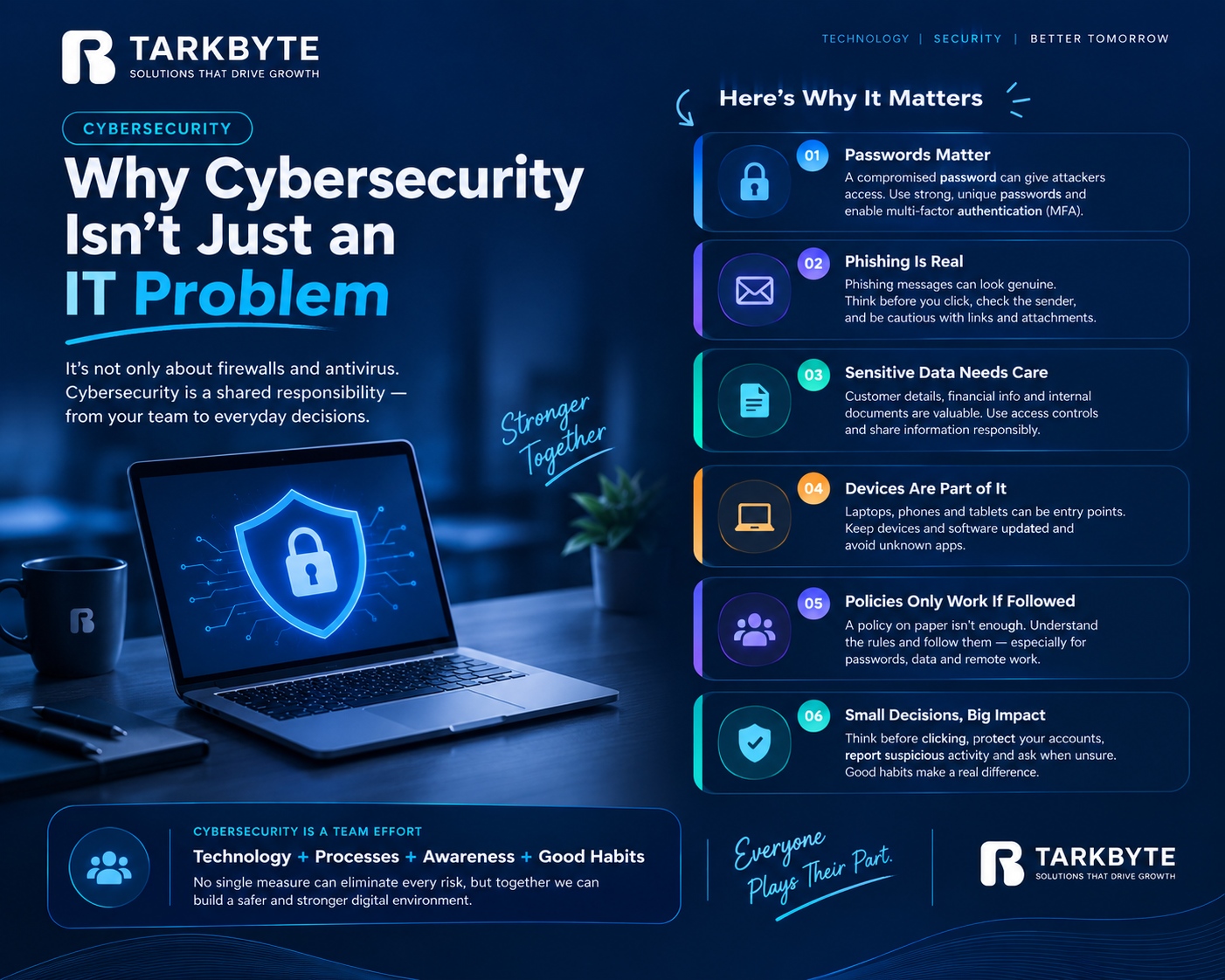
When people hear cybersecurity, they often think about firewalls, antivirus software, servers, and IT teams.
But technology is only one part of the picture.
A business can have security tools in place and still face risks from everyday decisions—such as clicking a suspicious link, reusing a password, sharing sensitive information, or ignoring an unusual login alert.
That’s why cybersecurity is a responsibility shared across an organization.
1. Passwords Matter
A compromised password can give attackers an easy way into an account.
Using strong, unique passwords for important accounts and enabling multi-factor authentication (MFA) where available can add important layers of protection.
Security isn’t only about creating a good password once. It’s also about avoiding password reuse and protecting account credentials.
Not everyone needs access to everything.
2. Phishing Often Starts With a Person
Phishing messages can look like legitimate emails, messages, invoices, or login requests.
A single click can potentially lead to credential theft, malware, or other security problems.
Before clicking an unexpected link or opening an unusual attachment, take a moment to check:
- Who sent it?
- Was you expecting it?
- Does the request make sense?
- Is the link pointing where you expect?
When something feels unusual, verifying it can be safer than assuming it’s legitimate.
3. Sensitive Information Needs Care
Businesses handle valuable information every day.
This can include customer details, financial information, employee records, internal documents, and business credentials.
Using appropriate access controls and being careful about where information is stored or shared can reduce unnecessary exposure.
4. Devices Are Part of the Security Picture
Laptops, phones, tablets, and other connected devices can all become potential entry points.
Keeping operating systems and applications updated, using appropriate security controls, and avoiding unknown software can help reduce common risks.
A company’s security is affected by the devices people use every day—not just the server room.
5. Security Policies Only Work When People Follow Them
Businesses may have policies covering passwords, data access, devices, remote work, or suspicious emails.
But a policy sitting in a document doesn’t protect anything by itself.
Employees need to understand why those rules exist and what they should do when something goes wrong.
Good security is easier to maintain when people know what is expected of them.
6. Small Decisions Can Have a Big Impact
Cybersecurity isn’t about expecting every employee to become a security expert.
It’s about building good habits.
Think before clicking.
Protect your accounts.
Keep devices updated.
Don’t share sensitive information unnecessarily.
Report suspicious activity.
Ask when you’re unsure.
These simple actions can become an important part of an organization’s overall security culture.
Cybersecurity Is a Team Effort
Technology can provide important layers of protection, but people interact with those systems every day.
That’s why a strong cybersecurity approach combines:
Technology + Processes + Awareness + Good Habits
No single measure can eliminate every cyber risk.
But when everyone understands their role, businesses can become better prepared to identify and respond to common threats.
Final Thought
Cybersecurity isn’t something that belongs only to the IT department.
Everyone who uses a company’s technology plays a part in keeping it secure.